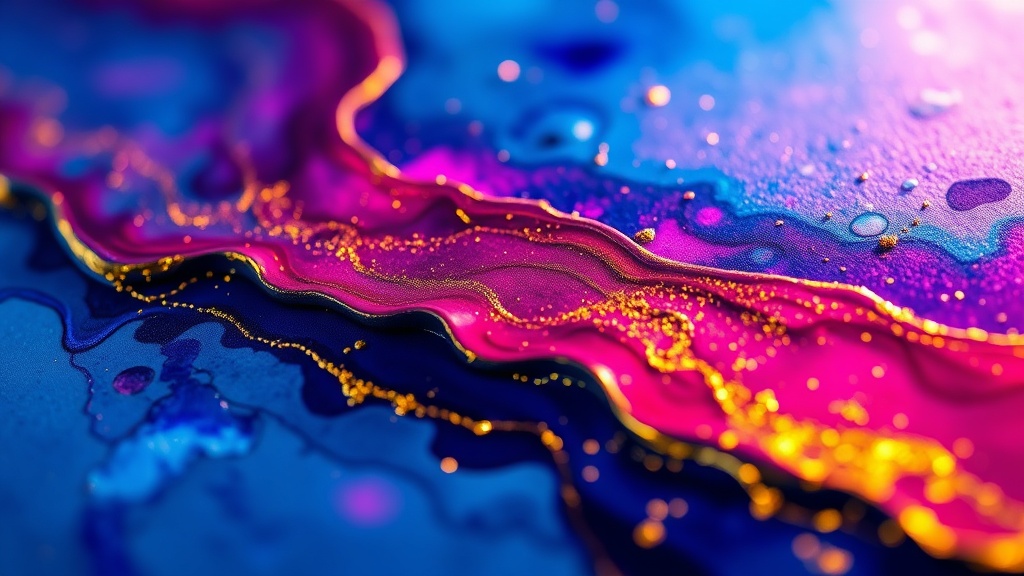
Luminous Layers: Experimenting with Gold Leaf and Transparent Glazes

Have you ever looked at a finished painting and felt that it lacked a certain internal glow, as if the light were merely hitting the surface rather than emanating from within? The difference often lies in the strategic application of light-reflective materials and translucent layers. By combining the sharp, metallic brilliance of gold leaf with the soft, depth-inducing properties of transparent glazes, you can move beyond flat color into the realm of three-dimensional luminosity.
The Fundamentals of Luminous Layering
To achieve a professional finish, one must understand that luminosity is a product of light physics. When light hits a standard opaque pigment, it bounces off the surface. When light hits a transparent glaze, it travels through the pigment, hits the white ground or a metallic layer beneath, and reflects back through the color. This creates a sense of "inner light."
The process involves two distinct disciplines: the precision of gilding and the controlled translucency of glazing. While gilding provides the structural "spark," glazing provides the atmospheric "mood." If you are already comfortable with texture, you might find these techniques a natural evolution from palette knife texturing techniques, where you build physical relief to catch the light.
Essential Materials for Gold and Glaze Work
Before beginning, organize your workspace with the precision of a project manager. A cluttered desk leads to contaminated gold leaf and muddy glazes. You will need the following specific items:
- Gold Leaf: For beginners, I recommend 22k imitation gold leaf (such as those from Jacquemart or Keay Color). It is more forgiving than genuine gold leaf and offers a high level of brilliance.
- Adhesive (Size): Use an oil-based gold size if you want a permanent, traditional bond, or an acrylic-based gilding size for water-based mixed media projects.
- Glazing Mediums: High-quality transparent mediums are non-negotiable. Look for Golden Artist Colors Transparent Glazing Liquid or Winsor & Newton Glazing Liquid.
- Brushes: Soft, synthetic mop brushes for wide glazes and fine-tipped sable brushes for detail work.
- Application Tools: A gilding brush (often called a "gilder's tip") and a burnishing tool, such as an agate stone or a polished steel tool.
Phase 1: The Application of Gold Leaf
The gold layer serves as your "light source." It is best applied during the mid-stages of a painting—after your initial underpainting is dry, but before your final detailed layers. This ensures the gold is protected but still influential to the composition.
Step 1: Preparing the Surface and Applying Size
Apply your gold size to the specific areas where you want the light to emerge. If you want a subtle glow, apply the size in thin, irregular patches. If you want a bold statement, define a clear shape. Once the size reaches a "tacky" state—meaning it is no longer liquid but feels slightly sticky to the touch—you are ready for the leaf. If the size is too wet, the leaf will slide; if it is too dry, the leaf won't adhere.
Step 2: Laying the Leaf
Use a gilder's tip to pick up a single sheet of gold leaf. Hold the sheet by the edges and gently tap it onto the sized area. Use a soft, dry brush to press the leaf into the adhesive. Work from the center outward to prevent air bubbles. For a more organic, "distressed" look, you can tear the leaf by hand rather than cutting it with precision scissors.
Step 3: Burnishing for Brilliance
Once the leaf is down, use an agate burnisher to rub the surface. This pressure flattens the gold and creates a mirror-like finish. If you are working on a textured surface, be careful not to over-burnish, as this can flatten the underlying sculptural elements of your painting.
Phase 2: The Alchemy of Transparent Glazes
Once your gold is set and any excess has been brushed away, you move into the glazing phase. This is where you "tint" the light. Instead of painting with color, you are painting with light-filtered color.
The Ratio of Pigment to Medium
The most common mistake is using too much pigment. A true glaze should be almost transparent. A successful ratio is typically 1 part pigment to 5 or even 10 parts glazing medium. If the mixture looks like paint, it is too thick. It should look like colored water or stained glass. For a deeper, more sophisticated look, experiment with pigments that have high transparency, such as Transparent Phthalo Blue or Indian Yellow.
Layering Techniques
The key to luminosity is patience. You must apply one thin layer, allow it to dry completely, and then apply the next. This builds a "stack" of color. For example, if you apply a thin layer of Transparent Amber over your gold leaf, the gold will appear to be glowing through a warm, sunset-like haze. If you follow this with a thin layer of Prussian Blue, you create a sophisticated "shadowed gold" effect that mimics the look of antique metalwork.
Controlling the Edge
When working with glazes, the edges can become messy. To maintain control, use a "wet-on-dry" approach. Ensure your underlying gold layer is fully cured and non-tacky. If you are working on a canvas, use a damp sponge to clean up any pigment that creeps outside your intended boundaries before it dries.
Advanced Experimentation: Combining Textures and Tints
To elevate your work from a simple exercise to a professional piece of art, consider how different mediums interact. You can create a sense of ancient, weathered luxury by combining these techniques with organic textures.
For instance, if you have previously explored creating botanical inks, you can use these natural, slightly more opaque liquids as a base before applying your gold. The organic imperfections of botanical pigments provide a beautiful contrast to the clinical perfection of gold leaf.
The "Shadow and Light" Method
A highly effective way to use these tools is to treat the gold as your "high point" and the glazes as your "low point."
- Define the Highlight: Apply gold leaf to the areas where the light would naturally hit an object (e.g., the crest of a wave or the curve of a petal).
- Build the Depth: Apply multiple layers of dark, transparent glazes (like Burnt Umber or Deep Indigo) around the gold. This creates a dramatic "chiaroscuro" effect, making the gold appear to pop forward in space.
- The Final Veil: Apply one final, very thin, wide-wash glaze of a warm color (like Raw Sienna) over the entire composition. This "unifies" the gold and the surrounding paint, making the gold feel like a part of the environment rather than an addition on top.
Troubleshooting Common Issues
Even with meticulous planning, issues can arise. Here is how to handle them:
- Problem: The gold leaf looks dull or "muddy."
Solution: This usually happens because the glaze was too opaque or the gold was not burnished enough. Ensure your glaze is highly diluted and that you are using a transparent medium rather than just water or oil. - Problem: The gold leaf is peeling off.
Solution: Your "size" (adhesive) was either too dry or too wet when you applied the leaf. Always test a small patch on a scrap piece of canvas to check the tackiness of your specific brand of adhesive. - Problem: The colors are becoming "flat" after glazing.
Solution: You are likely applying too much pigment and not enough medium. Stop adding color and start adding more transparent liquid. The goal is to build depth through many thin layers, not one thick layer.
By treating your painting process as a structured project—moving from the structural foundation of the gold to the atmospheric refinement of the glaze—you transform your canvas into a vessel for light. This disciplined approach ensures that your creative expression is not just a burst of color, but a controlled, luminous experience.