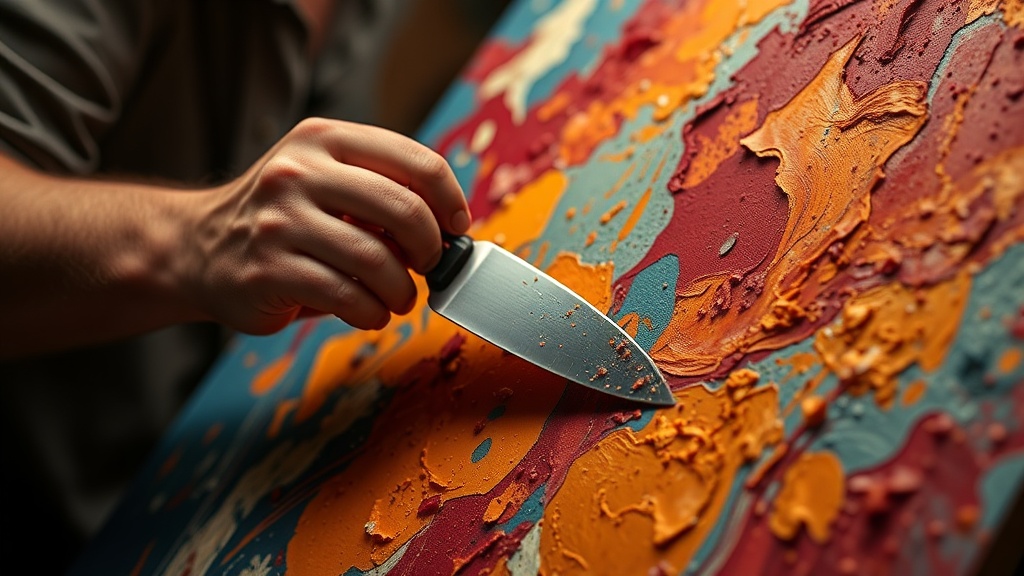
Mastering the Art of Palette Knife Texturing
Quick Tip
Use the edge of the knife for fine lines and the flat side for heavy, sculptural texture.
Elevate Your Canvas with Dimensional Texture
If you have ever felt that your paintings look a bit too "flat," you are likely craving more dimension. While brushes are essential for detail, the palette knife is your secret weapon for creating movement, light, and structural depth. Much like the precision required in mastering the art of Kintsugi-style gold repair, working with palette knives requires a balance of intentionality and an appreciation for the beauty of "imperfection."
The Essential Toolkit
Before you dive in, ensure your workstation is organized. A cluttered space leads to a cluttered mind—a lesson I learned early in my project management career. To achieve professional results, you will need:
- Stainless steel palette knives: Look for various shapes (teardrop, diamond, and rectangular) to achieve different edge effects.
- Heavy-body acrylics or oils: Thin paints will not hold the ridges required for texture.
- A firm surface: Use a heavy canvas or a wooden panel to support the weight of thick paint.
Three Techniques for Instant Depth
To transition from smooth blending to sculptural painting, try these three methods:
- The Impasto Method: Load a generous amount of paint onto the flat side of the knife. Instead of "painting," think of it as "spreading." Press the paint onto the canvas with firm, decisive strokes to create thick, raised ridges.
- Scraping and Sgraffito: Use the edge of the knife to scrape away wet paint, revealing the layers underneath. This creates a beautiful, weathered look that mimics the organic textures found in nature.
- The "Dab and Lift": For highlights (like sea foam or flower petals), dip the tip of the knife into the paint and lift it straight up from the canvas. This creates a "peak" that catches the light beautifully.
"Texture is not just about adding more paint; it is about how the light interacts with the surface you have created."
Organizing Your Creative Process
Mastering a new medium can feel overwhelming. I find that treating my art sessions like a structured project helps maintain momentum. Just as I use a journal reset to boost productivity, I recommend setting a specific "texture goal" for every session. Don't try to texture the whole canvas at once; focus on one area—perhaps a mountain peak or a crashing wave—to build your confidence.
Pro Tip: Always clean your knives immediately after use. Dried, heavy-body paint is difficult to remove and can ruin the precision of your edges for your next masterpiece.