Why Your Sketchbook Pages Stay Empty

The psychological barrier of the blank page
Research in cognitive psychology suggests that the "blank page syndrome" is often a byproduct of perfectionism rather than a lack of creativity. When you stare at a pristine, heavy-weight 140lb Arches paper or a crisp Moleskine page, your brain perceives the empty space as a high-stakes environment where every stroke must be a masterpiece. This post identifies the structural and psychological reasons your sketchbooks remain empty and provides practical systems to transform them from intimidating relics into functional creative logs.
The primary culprit is the "Preciousness Trap." When you invest in high-end materials—such as a leather-bound Stillman & Birn sketchbook or professional-grade Winsor & Newton watercolours—you subconsciously create a mental contract that the content must justify the cost. This creates a paralysis where the fear of "ruining" an expensive sheet of paper outweighs the desire to practice a new technique.
The perfectionism of the "Masterpiece" mindset
Many artists approach a sketchbook as if it is a collection of finished works rather than a laboratory for experimentation. If your goal is to produce a gallery-ready piece every time you open your book, you will inevitably face burnout. A sketchbook is a tool for failure, not a trophy case for success.
- Shift from "Output" to "Process": Instead of aiming for a finished drawing of a botanical specimen, focus on the movement of your hand. Use a cheap HB pencil or a Pentel Sign Pen to simply map out shapes.
- The "Ugly Sketch" Rule: Intentionally create a page that you know will be bad. Use a low-quality ballpoint pen or a cheap Crayola marker. By intentionally making something "ugly," you break the psychological seal of perfectionism.
- Limit Your Scope: Instead of a blank page, give yourself a constraint. Draw only circles, or only straight lines, or only one specific color. Constraints reduce the overwhelming number of choices available to your brain.
Structural issues: The intimidation of the unused page
A common issue is the lack of a starting point. A completely blank book offers too much freedom, which can lead to decision fatigue. To combat this, you need to implement a system that dictates what happens on the page before you even sit down at your desk.
One effective method is the "Prompt System." Rather than waiting for inspiration to strike, use a predetermined list of subjects. This could be a list of objects on your desk, such as a ceramic mug, a pair of scissors, or a dried eucalyptus branch. If you find that your color choices are also hindering your progress, you might want to review why your color palettes feel muddy and boring to ensure your experimental pages are actually yielding the results you want.
The material mismatch: Using the wrong tools for the job
Sometimes, the reason you aren't sketching is that your tools are physically frustrating to use. If you are trying to practice watercolor washes in a sketchbook with thin, toothless paper, the water will bleed through or create unsightly cockling. This frustration leads to a lack of desire to return to the book.
Ensure your sketchbook's paper weight matches your medium. For example:
- Graphite and Ink: Use any standard sketchbook, such as a Leuchtturm1917, which handles fine-liner pens like Micron P pens exceptionally well.
- Watercolor and Gouache: You must use heavy-weight paper (at least 300gsm/140lb). If you use light paper, the frustration of the paper warping will stop you from practicing.
- Mixed Media: If you plan to use both ink and light washes, look for "Mixed Media" specific books that have a slight tooth to hold the pigment without excessive bleeding.
Implementing a "Low-Stakes" Daily Routine
As a project manager, I view a sketchbook as a series of small, manageable tasks. If you treat "drawing" as one giant task, it will always be moved to the bottom of your to-do list. Break it down into "micro-sessions."
Set a timer for exactly 10 minutes. During these 10 minutes, you are not allowed to erase. Use a permanent medium like a Uni-ball Signo gel pen or a fountain pen. The inability to erase forces you to accept your mistakes and move forward. This builds the "muscle memory" of acceptance, which is vital for long-term artistic growth.
"A sketchbook is not a place for your best work; it is a place for your most honest work. The honesty lies in the mistakes, the messy edges, and the half-finished thoughts."
The "Index and Log" Method
One reason artists stop using sketchbooks is that they become a disorganized mess of unrelated scraps. To keep yourself motivated, treat your sketchbook like a professional archive. Dedicate the first three pages to a Table of Contents or an Index. As you complete a page—even a messy one—assign it a number and a brief description in your index.
This turns your sketchbook into a structured project. Seeing a growing list of "completed" entries provides a dopamine hit that encourages you to keep going. You aren't just doodling; you are building a documented history of your technical evolution. This might include:
- Technique Trials: Testing how a specific brush behaves with different water ratios.
- Color Studies: Testing a new set of Polychromos colored pencils against different paper textures.
- Observation Logs: Quick 2-minute sketches of people in a coffee shop or the light hitting a specific corner of your room.
If you find that your technical execution is lacking when you do try to use more complex mediums, practicing your foundational washes is a great way to build confidence. You can learn more about this by reading our guide on mastering watercolor washes to ensure your sketchbook pages look intentional rather than accidental.
Creating a Dedicated "Art Station"
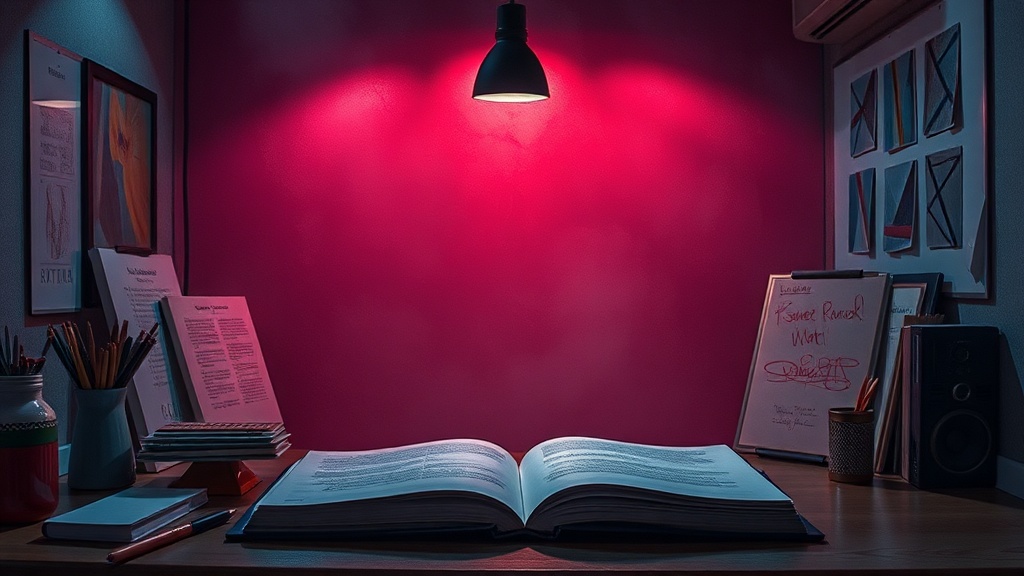
The friction of setup is a major productivity killer. If you have to clear your dining table, find your sketchbook, unroll your butcher paper, and find your water jar every time you want to draw, you simply won't do it. This is a failure of environmental design.
Create a "Go-Bag" or a dedicated tray. This tray should contain your most frequently used items: a sketchbook, a single pencil, one fine-liner, and a small water brush (like a Pentel Aquash). If your entire kit is ready to go in a single container, the barrier to entry drops from "twenty minutes of setup" to "five seconds of grabbing."
By removing the logistical hurdles and lowering the psychological stakes, you transform the sketchbook from a daunting monument of potential into a functional, daily tool for growth. Stop waiting for the perfect idea and start documenting the imperfect process.