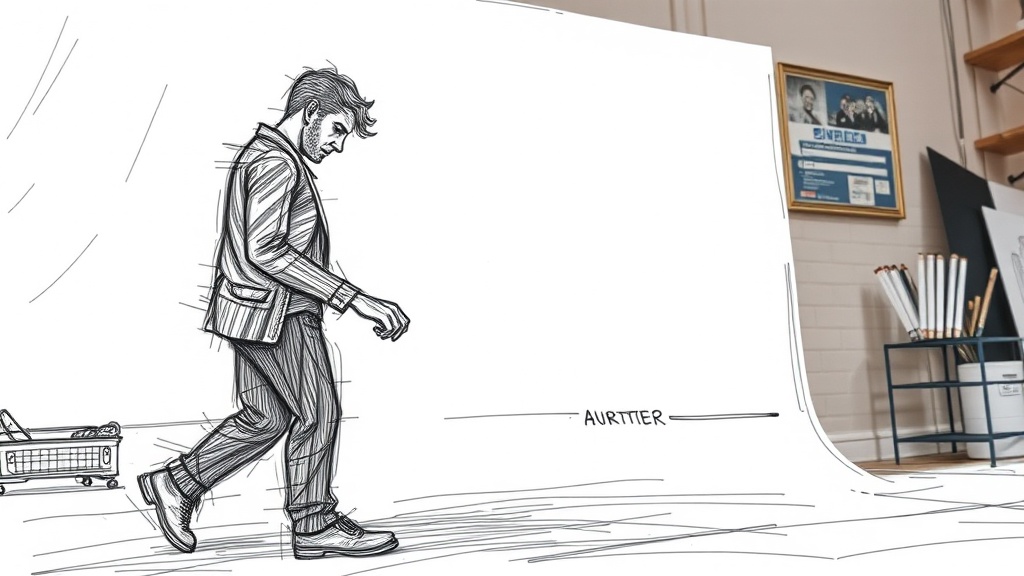
Give Your Sketches More Life with Variable Line Weight

Quick Tip
Varying your line weight creates visual hierarchy and simulates depth without needing color.
Many artists assume that a single, consistent line weight is the safest way to keep a drawing clean. They think using a single fine-liner—like a standard 0.3mm Sakura Pigma Micron—will prevent the sketch from looking messy. In reality, a uniform line weight often makes a drawing look flat, robotic, and lifeless. This post explores how varying your line thickness adds depth, shadow, and movement to your work.
Why Should You Use Variable Line Weight?
Variable line weight creates a sense of three-dimensional depth and directs the viewer's eye toward focal points. When you use thick lines for shadows and thin lines for highlights, you're telling a story about light and weight without needing to color it in yet. It's a way to add structure to a sketch before you even touch a brush.
Think about the edges of an object. A heavy line suggests a shadow or a weightier part of the form, while a thin, delicate line suggests light or a soft edge. (It's actually a bit like how we perceive depth in the real world—things closer to us often feel more substantial.)
What Tools Help Create Different Line Widths?
You can achieve varied thickness using almost any medium, from technical pens to traditional brushes. The tool you choose dictates the level of control you'll have over the "flow" of the line.
| Tool Type | Best For... | Example Product |
|---|---|---|
| Technical Pens | Consistent, controlled lines | Sakura Pigma Micron |
| Brush Pens | Dynamic, sweeping strokes | Pentel Fude Tapestry |
| Dip Pens | Extreme precision and flair | Brause Metal Nib |
If you're working on a digital tablet, you'll want to ensure your brush settings are sensitive to pressure. If your lines look "stiff," you might need to check your pressure sensitivity settings to ensure the software is reacting to your hand's weight.
How Can I Practice Line Weight Variation?
Practice involves intentional exercises that force you to break away from the "uniformity" habit. It isn't about being perfect; it's about being expressive.
- The Pressure Test: Draw a long, continuous line starting with almost zero pressure and slowly increasing it until the line is thick and heavy.
- The Tapering Exercise: Practice drawing "hair-like" lines that start thick and end in a very fine, wispy point.
- The Shadow Mapping: Sketch a simple sphere and use a thicker line on the bottom edge to simulate a shadow.
Don't be afraid to make mistakes. If a line feels too heavy, it's better to learn from it now than to wonder why your sketches feel stagnant later. Even a "messy" line can be a deliberate choice if it serves the composition.