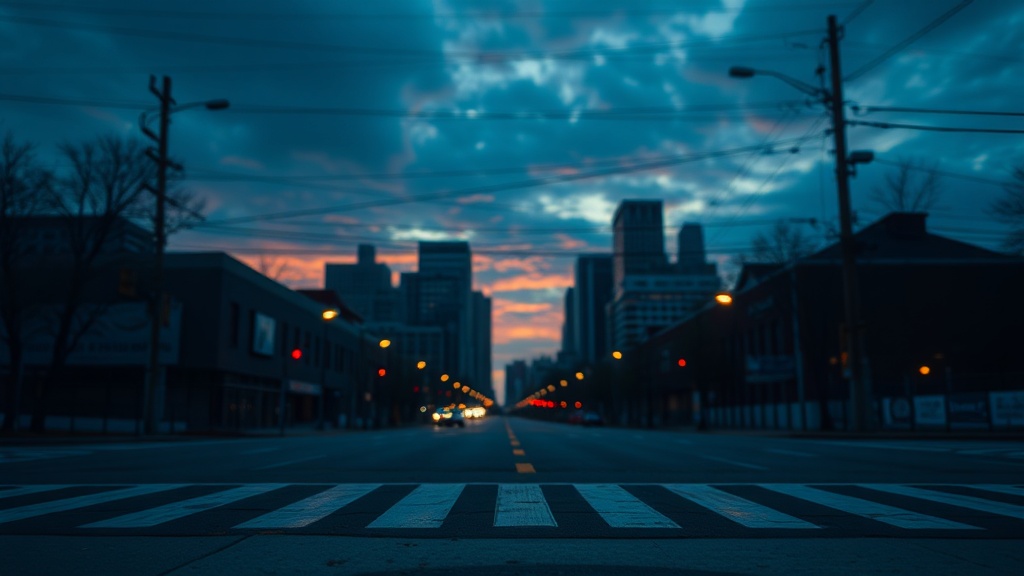
Fix Your Composition with the Rule of Thirds

Quick Tip
Avoid the center of the canvas to create more visual interest and movement in your work.
In this quick tip, you'll learn how to use the Rule of Thirds to create more balanced, engaging compositions in your photography, painting, or digital art. Mastering this simple grid system helps you avoid the common mistake of centering every subject, which often makes a piece feel static or uninspired.
What is the Rule of Thirds?
The Rule of Thirds is a compositional technique that involves dividing an image into a 3x3 grid of nine equal parts. By placing your subject or important elements along these lines or at their intersections—often called power points—you create more tension, energy, and interest in your work. It's a fundamental concept used by everything from professional photographers using a Canon EOS camera to digital illustrators.
Think of it as a way to guide the viewer's eye through your art. Instead of a "bullseye" effect where everything hits the center, you're giving the eye a path to follow. (It's much more satisfying to look at, trust me.)
How Do You Apply the Rule of Thirds in Painting?
You apply the rule by identifying your focal point and positioning it at one of the four intersections where the grid lines meet. While it's a guide, not a strict law, it provides a solid framework when you're feeling stuck.
Here are three ways to use it across different mediums:
- Photography: Turn on the grid feature on your smartphone or DSLR to align the horizon line with the top or bottom third.
- Watercolor: If you're practicing watercolor techniques, place your main botanical subject on a vertical third line to create a sense of movement.
- Sketching: Use the intersections to place high-contrast details, making them pop against the rest of the page.
Where Should I Place the Horizon Line?
You should place the horizon line on either the upper third or the lower third of your canvas to create a sense of scale and depth. A middle horizon can often feel "split" and boring, which kills the mood of a piece.
If you want to emphasize a dramatic sky, put the horizon on the bottom third. If the ground or foreground is the star of the show, move that line to the top third.
| Composition Goal | Placement Strategy |
|---|---|
| Emphasize Sky/Atmosphere | Horizon on the bottom 1/3 |
| Emphasize Foreground/Detail | Horizon on the top 1/3 |
| Create Symmetry | Center the horizon (use sparingly!) |
The catch? Don't get so obsessed with the grid that you lose your creative intuition. Sometimes, a centered subject is exactly what a minimalist piece needs. Use the rule to build your foundation, then break it when the art demands it.