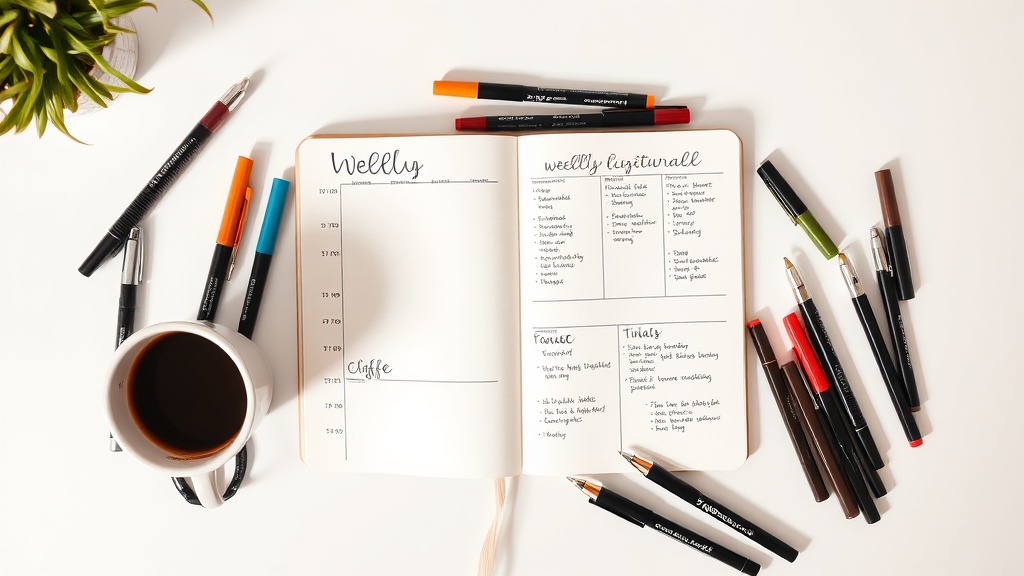
The Pen Test: I Tried 12 Fineliners So You Don't Have To
My mother guarded her felt-tip pens like they were heirlooms. We had a whole system: red for her work schedule, green for school events, blue for appointments, purple for anything my dad claimed he'd do but probably wouldn't. If you used the wrong pen for the wrong category, she would notice. Not immediately — but she would notice.
I think about that a lot when I'm standing in front of my stationery shelf trying to decide which fineliner to reach for.
Here's what nobody tells you when you get into bullet journaling: the pen situation is genuinely complicated. Not "overwhelmingly complex" complicated — but complicated enough that I've watched good spreads get ruined by the wrong pen on the wrong paper. Bleed-through you can't fix. Color that fades by week three. A tip that splays after two months and now your straight lines look like they were drawn during an earthquake.
So I did what any reasonable planner obsessive would do: I spent 90 days running a structured test on 12 fineliners. Multiple papers, multiple spread types, daily use. This is that report.
The Setup
Test papers: Leuchtturm1917 dotted (80gsm), Rhodia DotPad (80gsm), Midori MD notebook (~80gsm). These three papers clock in at similar weights — but they behave very differently under ink. Leuchtturm is the default bullet journal choice; Rhodia has a smoother, harder vellum finish; MD paper has a unique soft-matte coating that resists lateral ink spread in a way the other two don't. I wanted to test across surface character and coating behavior, not just weight.
(Prices noted throughout are approximate and vary by retailer. Check current listings before buying.)
Test duration: 90 days of actual daily use. Not a one-afternoon swatch session. Real writing, real color-coding, real hand-lettering headers, real "scribbled a meeting note while on a Teams call" usage.
What I tracked: Bleed-through on each paper, color accuracy vs. packaging (this matters more than people admit), tip wear after 30/60/90 days, comfort during long spread sessions, cap-off dry time, and price-to-performance value.
The 12 contenders — organized by tier so you know what you're paying for:
Premium Tier
Pigma Micron (Sakura) — $3–4 per pen
The standard. I've been using Microns since junior year of college and I own probably 40 of them at this point, which tells you something.
Bleed: Zero on Leuchtturm, zero on Rhodia, zero on Midori. This is the benchmark every other pen gets measured against.
Color: Consistent to spec. The black is genuinely archival-grade — it does not fade, it does not gray, it does not shift. The color set (red, blue, green, etc.) is accurate and stable.
Tip longevity: After 90 days of daily use, my 01 tip (0.25mm) was still drawing crisp lines. This is exceptional. Most fine tips start to wear or splay by week six with heavy use.
Comfort: Neutral. The barrel is thin and ungripped, which works fine for short sessions but your hand will notice during a 2-hour spread session.
Verdict: Best for hand-lettering and detail work. The line control is unmatched at this tip size. If I could only keep one pen, it would be this one. Yes, it's that decisive.
Tombow Fudenosuke (Hard Tip) — $3 per pen
This is the pen that changed how I do headers. The brush tip is firmer than most brush pens, which means you get line variation without the chaos — perfect for learning hand-lettering or for quick brush script on daily logs.
Bleed: None on Rhodia or Midori. On Leuchtturm 80gsm, very slight shadowing on the back of the page with heavy ink loading, but it won't bleed through.
Color: The black is warm, not cool. If you're mixing it with Microns (which run neutral-cool), you'll notice. Not a dealbreaker, just something to know.
Tip longevity: Excellent. The hard tip holds its shape better than soft brush pens by a wide margin.
Comfort: Great. The tapered barrel fits naturally in-hand.
Verdict: Best for lettering headers and brush calligraphy. Not a fineliner in the traditional sense, but it earns its place on this list because no spread list is complete without a brush option and this is the one I trust.
Staedtler Triplus Fineliner — $1.50–2 per pen (usually sold in sets)
Everyone recommends these for color-coding and they're right, but there's a reason I don't use them for everything.
Bleed: No bleed on Rhodia or Midori. On Leuchtturm, the deeper colors (navy, dark green) show faint ghosting but don't bleed through.
Color: The color range is the best I've tested. Vibrant, true-to-packaging, and — critically — the colors are distinct enough that your coding system actually works. Some "12-color sets" from other brands give you three shades of green that look identical under artificial light. Staedtler doesn't have this problem.
Tip longevity: This is where I have a complaint. The 0.3mm tip is reliable for the first 60 days, but I noticed some tip softening by day 90 with daily use. It's minor, but if you're doing architectural lettering that requires very precise lines, you'll feel it.
Comfort: The triangular barrel is genuinely ergonomic for long sessions. One of the most comfortable pens in this test.
Verdict: Best for color-coding. Period. The color variety, the comfort, and the consistent bleed performance make these the go-to for weekly spread color systems. Buy a set, not individual pens.
Mid-Range Tier
Pentel Fude Sign Pen — $3.50 per pen
Underrated. This is a felt-tip brush pen with more flow than the Fudenosuke, which gives you bolder, more expressive brush strokes. I use it for title headers when I want drama.
Bleed: This pen is wet. On Leuchtturm 80gsm, it bleeds through on heavy strokes. Rhodia handles it fine. Midori's soft-matte coating handles it beautifully — the surface resists spread in a way Leuchtturm just doesn't. Know your paper before you reach for this one.
Color: Deep, saturated black. Gorgeous.
Tip longevity: 90 days of occasional use (not daily) and the tip is still performing well. I wouldn't make this a daily driver.
Comfort: The flexible barrel feels slightly cheap but the writing experience is excellent.
Verdict: Best for mixed-media spreads on Rhodia or Midori. Keep it away from Leuchtturm unless you like ghost lines.
Copic Multiliner — $4–5 per pen
I wanted to love these more than I do. Copic's reputation in illustration is enormous, and the ink quality is legitimately excellent — pigment-based, waterproof, and designed to be Copic-marker-compatible for mixed-media work.
Bleed: No bleed on Rhodia or Midori. Light ghosting on Leuchtturm.
Color: Beautiful neutral black. Works as undertone for watercolor or Copic marker layers without dissolving.
Tip longevity: Where it gets complicated. The tips are replaceable (great for the long haul), but the initial tips started to splay faster than I expected — noticeable by day 75 with daily use.
Comfort: The metal barrel is heavy and premium-feeling. I like it but my hand fatigues faster than with lighter pens during long sessions.
Verdict: Best for mixed-media spreads where you're also using Copic markers or watercolor. If you're doing pure bullet journaling without illustration layers, the price premium isn't justified over a Micron.
Neuland No. 1 Art Pen — $6–8 per pen
This one surprised me. Neuland is a German brand better known in the facilitation/visual thinking space than in bullet journaling circles, and the No. 1 is more of a chisel-tip marker than a traditional fineliner. But the 0.5mm version is legitimate for planner use.
Bleed: Minimal on Rhodia, some ghosting on Leuchtturm. Refillable ink is a variable — ink weight affects bleed behavior.
Color: The color range is muted and sophisticated. Less "pop" than Staedtler, more "editorial." Honestly beautiful for certain spread aesthetics.
Tip longevity: Refillable and replaceable tips. In theory, indefinite. In practice, the tip replacement process is fiddly.
Verdict: Most underrated pen in this test, but not for everyone. If you want a sophisticated, earth-toned color system and don't mind paying for it, these are genuinely special. Not a starter pen.
Budget Tier
Arteza Professional Fineliner Set — ~$0.60 per pen (sold in sets of 24–48)
Let me be honest here: the "professional" in the name is doing a lot of heavy lifting.
Bleed: Inconsistent. Most colors perform fine on Rhodia. On Leuchtturm 80gsm, about 30% of the colors show some bleed-through, and it's not predictable — the dark colors aren't necessarily the worst offenders. I found a medium teal that bled worse than the black.
Color: Bright and cheerful. The saturation is high, which looks good on Instagram but can feel overwhelming in an actual daily log. The colors are also slightly less accurate to packaging than I'd like — the orange reads more coral, the purple reads more blue.
Tip longevity: By day 60, four of my 24 pens had noticeable tip wear. By day 90, six. That's 25% attrition in 90 days.
Comfort: Totally fine. Standard barrel, no complaints.
Verdict: Valid starter set for learning color-coding before you commit to more expensive pens. Not a long-term system pen. Buy these to figure out which colors you actually use, then upgrade those specific colors to Staedtler.
Shuttle Art Fineliner — ~$0.40 per pen (sold in sets)
Very similar story to Arteza. Slightly more consistent bleed performance, slightly less vibrant color, similar tip longevity issues.
The one thing they do better than Arteza: The set I tested had more accurate color-to-packaging matching. What you see on the cap is closer to what you get on paper.
Verdict: Interchangeable with Arteza for starter purposes. Buy whichever is on sale.
Pilot Razor Point — $1.50 per pen
I had high hopes. The Pilot reputation, the "razor" precision claim — it should have been great.
Bleed: Fine on Rhodia and Midori. On Leuchtturm 80gsm, this pen bled through more consistently than anything else in the budget tier. It's a wet-writing pen and Leuchtturm's 80gsm is just not its paper.
Cap-off longevity: Poor. This pen dries out faster than any other pen I tested. Leave the cap off for 30 minutes and you're doing damage. I dried out one pen completely by accidentally leaving it uncapped during a meeting.
Tip longevity: The actual tip held up well for 90 days — the precision is consistent. The cap-off issue is the dealbreaker.
Verdict: Skip this for daily journaling unless you have excellent cap discipline. Better options at this price point.
Wildcard Tier
Sakura Gelly Roll (White, 08) — $2 per pen
Not a fineliner. I'm including it anyway because it's essential.
If you use dark paper, kraft paper, or black pages in your spreads, the white Gelly Roll is non-negotiable. Nothing else in this test writes clean white on dark surfaces consistently. The 08 (medium) tip is the sweet spot between control and opacity.
Bleed: Doesn't apply to dark paper. On standard paper, the white ink creates a raised surface rather than bleeding.
Longevity: Gelly Rolls dry out within 60–90 days of regular use. Buy two, keep one capped as backup.
Verdict: Buy one. Not optional if you do any dark-paper work.
Tombow Mono Zero Eraser (Round Tip) — $5
Also not a pen. Also essential.
The round-tip Mono Zero is a precision eraser that can target a single letter without disturbing the surrounding work. This is for the moments when you letter a header perfectly except for one character, and you'd rather not start over. I've saved probably 30 spreads with this thing.
Verdict: Buy one. Keep it next to your Microns.
The Bleed Test Results (Summary)
| Pen | Leuchtturm 80gsm | Rhodia 80gsm | Midori MD ~80gsm |
|---|---|---|---|
| Pigma Micron | ✅ Clean | ✅ Clean | ✅ Clean |
| Staedtler Triplus | ✅ Clean (minor ghosting on darks) | ✅ Clean | ✅ Clean |
| Tombow Fudenosuke | ⚠️ Light shadow (heavy loading) | ✅ Clean | ✅ Clean |
| Copic Multiliner | ⚠️ Light ghosting | ✅ Clean | ✅ Clean |
| Pentel Fude Sign | ❌ Bleeds on heavy strokes | ✅ Clean | ✅ Clean |
| Neuland No. 1 | ⚠️ Light ghosting | ✅ Clean | ✅ Clean |
| Arteza Professional | ⚠️ ~30% of colors bleed | ✅ Most clean | ✅ Clean |
| Shuttle Art | ⚠️ ~20% of colors bleed | ✅ Most clean | ✅ Clean |
| Pilot Razor Point | ❌ Consistent bleed | ⚠️ Minor | ✅ Clean |
All three papers land at roughly the same gsm — the bleed differences come down to surface finish and coating, not weight. Leuchtturm's softer, more absorbent surface is the hardest on wet-writing pens. Rhodia's hard vellum finish gives wet inks less to grab. Midori's soft-matte coating sits between the two but resists ink spread laterally in a way that keeps even the Pentel Fude Sign clean.
Takeaway: If you're on Leuchtturm (the most common bullet journal), stick to Micron, Staedtler Triplus, or Tombow Fudenosuke. If you're on Rhodia or Midori, you have a lot more freedom.
The Category Winners
Best for color-coding: Staedtler Triplus Fineliner. Color variety is unmatched, bleed performance is reliable, ergonomic barrel for long use, and the price per pen in sets is reasonable.
Best for hand-lettering: Pigma Micron + Tombow Fudenosuke (together). Micron for detail and consistency, Fudenosuke for headers with brush variation. These two cover 90% of lettering needs.
Best for daily notes: Pigma Micron 05 (0.45mm). This is the tip size I reach for every single day. Consistent, comfortable enough for fast writing, no bleed anywhere, archival quality.
Best for mixed-media spreads: Copic Multiliner (if you're using Copic markers) or Pentel Fude Sign on Rhodia/Midori (if you want bold brush lines for illustration layers).
Most underrated: Neuland No. 1. Not for everyone, not a starter pen, but the refillable system and sophisticated color palette make it genuinely special for experienced spreaders.
Best budget entry point: Arteza Professional or Shuttle Art set — to figure out your color coding system before upgrading. Treat them as disposable test pens.
My Actual Rotation
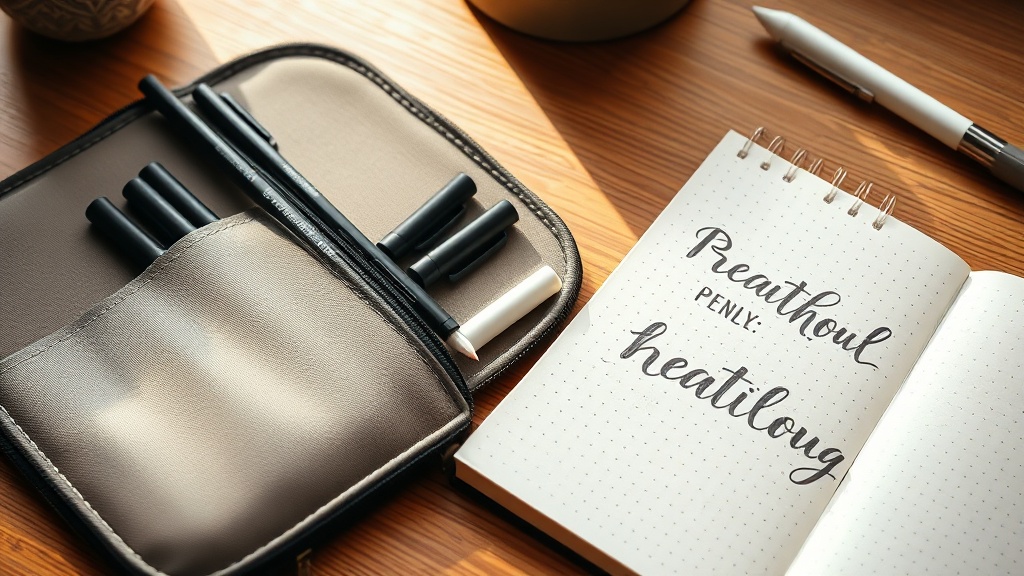
I don't use all 12 pens at once. Here's how I actually work:
Weekly spread setup: Pigma Micron 01 (grid lines, boxes, small text) + Staedtler Triplus (color-coding) + Tombow Fudenosuke Hard (section headers). This is 90% of my spread work.
Art/creative spreads: Copic Multiliner (outlines) + Pentel Fude Sign (bold brush elements) + Gelly Roll white (highlights on dark elements). Reserved for when I have time to sit down and actually make something beautiful.
Daily log, fast writing: Pigma Micron 05. That's it. When I'm in a meeting, I'm not thinking about pen selection.
Correction work: Mono Zero eraser. Always within reach.
Budget Real Talk
Total for all 12 items tested: approximately $180, which looks alarming until you realize you don't need all of them.
Here's how I'd actually build a system by budget:
$20 starter kit: Shuttle Art or Arteza set (24 colors, $12) + two Pigma Microns in 01 and 05 ($7). This covers color-coding and detail work. Start here, see what you reach for.
$50 upgraded kit: Add Tombow Fudenosuke Hard ($3) + Staedtler Triplus 20-color set ($18) + Gelly Roll white ($2). Now you have a real lettering and color system.
$100 full creative kit: Everything above + Copic Multiliner set (05 and 08, $9) + Pentel Fude Sign ($4) + Neuland No. 1 in 2–3 colors ($20) + Mono Zero eraser ($5). This is a serious spread kit.
Save on: Budget-tier pens for color exploration, sets vs. individual pens, buying Staedtler in larger sets (cost per pen drops significantly).
Spend on: Pigma Microns (the longevity pays for itself), Tombow Fudenosuke (the quality justifies the price), one good precision eraser.
Your Turn
I want to know: what pen have you been sleeping on that I didn't test? And for Leuchtturm users — are you team Micron or have you found something that competes?
Drop your pen rotation in the comments. I'm genuinely curious whether the r/bulletjournal community is sleeping on something I missed. And if you run your own bleed test on a paper I didn't cover, I want to see the results — tag me or leave a note below.
The right pen isn't the most expensive pen. It's the one that works on your paper, for your use case, at the price point that doesn't make you wince. Hopefully this gives you a shorter path to finding it.
Supply list for replicating this test: Leuchtturm1917 dotted notebook ($25), Rhodia DotPad ($12), Pigma Micron set ($20), Staedtler Triplus 20-color set ($18), Tombow Fudenosuke Hard ($3), Gelly Roll white ($2), Mono Zero eraser (~$5). Total to build a tested, functional system: ~$85. All prices approximate — verify before purchasing.