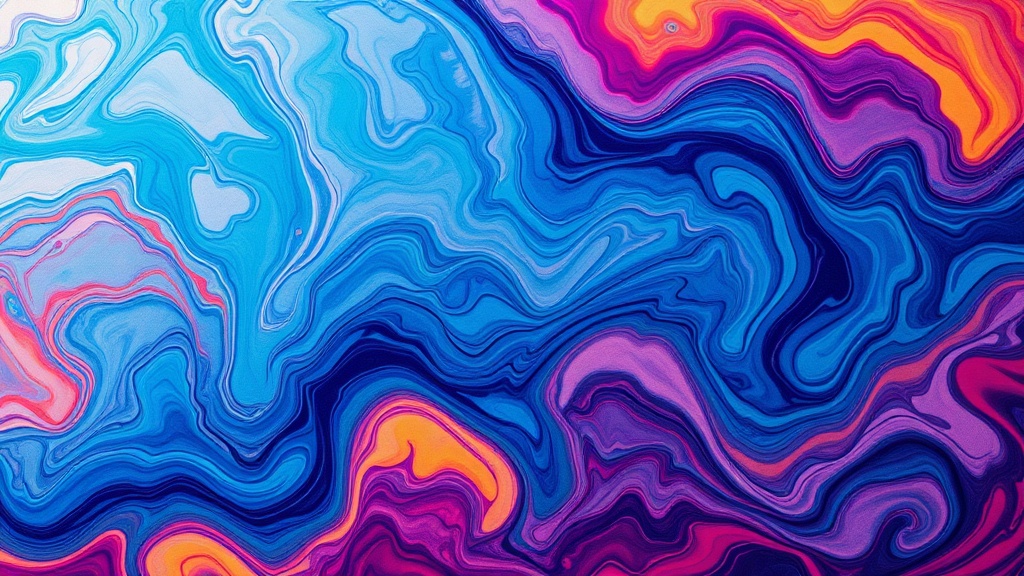
The Complete Beginner's Guide to Acrylic Pour Painting
What Acrylic Pour Painting Involves and Why It Belongs in the Creative Toolkit
This guide covers everything needed to start acrylic pour painting: the specific supplies, paint consistency ratios, four foundational techniques, troubleshooting common failures, and finishing methods. Acrylic pouring offers a low-barrier entry point into abstract visual arts—no brushes, no drawing skills, no prior painting experience required. A complete starter setup costs between $45 and $80, and the first finished piece can happen within 30 minutes of opening supplies. For bullet journal enthusiasts and planner addicts already comfortable with color theory and layout design, acrylic pouring extends those organizational instincts into fluid art with predictable, replicable results.
The Science Behind the Flow
Acrylic pour painting relies on fluid dynamics and density differentials. Acrylic paint suspended in a pouring medium becomes fluid enough to spread across a surface while maintaining pigment integrity. Silicone oil creates cellular reactions—those characteristic round "cells" that appear in poured pieces—by repelling the water-based paint mixture. Understanding this chemistry eliminates guesswork.
The viscosity of the paint mixture determines success. Too thick, and the paint won't flow or level properly, leaving bare spots and uneven coverage. Too thin, and colors muddy together into brownish sludge, or the paint runs straight off the canvas edges. The target consistency resembles warm honey or liquid pancake batter.
Essential Supply List with Specific Brands and Costs
Base Materials
- Acrylic paints: Liquitex Basics 4-ounce tubes ($3.50-$6.50 each), Arteza 22-milliliter tubes ($15 for a 60-color set), or Golden Fluid Acrylics ($8-$12 per 4-ounce bottle). Beginners need 4-6 colors maximum.
- Pouring medium: Liquitex Professional Pouring Medium ($18 for 32 ounces), Floetrol ($8-$12 per quart at hardware stores), or GAC 800 by Golden ($18 for 16 ounces). Floetrol offers the best cost-per-ounce ratio for practice pieces.
- Canvas: 8x10-inch or 10x10-inch stretched canvases from Michael's Artist's Loft ($15 for a 6-pack). Flat canvas panels work for practice but require sealing on the back to prevent warping.
- Cups: 3-ounce plastic bathroom cups ($3 for 100). Avoid paper cups—acrylic soaks through.
- Stirring sticks: Wooden craft sticks or plastic straws.
- Silicone oil: 100% pure silicone treadmill lubricant ($10 on Amazon) or dedicated acrylic pouring silicone ($8-$15). Do not use cooking spray—it contains propellants that affect paint chemistry.
- Protective surface: Plastic sheeting, garbage bags, or a dedicated silicone mat ($15-$25).
- Gloves: Nitrile gloves ($8 for 100-count box). Latex dissolves with prolonged acrylic exposure.
- Level: Small bubble level ($5) to ensure the drying surface is perfectly flat.
Optional but Recommended
- Torch or heat gun: Small butane torch ($12) eliminates bubbles and activates cell formation.
- Push pins or thumbtacks: Inserted into canvas corners to lift pieces off the work surface, allowing drips to fall freely.
- Plastic squeeze bottles: For pre-mixing and storing paint blends ($6 for 3-pack).
Mixing Ratios and Paint Consistency
Consistency determines whether a pour succeeds or becomes a muddy disappointment. Different paint brands require different ratios:
- Liquitex Basics: 1 part paint to 2 parts pouring medium
- Arteza: 1 part paint to 1.5 parts pouring medium
- Cheap craft paints (Apple Barrel, Craft Smart): 1 part paint to 1 part pouring medium (these are pre-thinned)
- Golden Heavy Body: 1 part paint to 3-4 parts pouring medium
Mix paint and pouring medium thoroughly in a cup using a stick. Scrape sides and bottom. The mixture should coat a stir stick and drip off in a continuous ribbon that disappears into the cup within 3-5 seconds. If it drips like water, add more paint. If it falls in globs, add more medium.
After achieving proper consistency, add 2-3 drops of silicone oil per 2 ounces of paint mixture. Stir once or twice—over-mixing breaks down the silicone into particles too small to create cells.
Four Foundational Techniques
The Dirty Pour
Layer 3-4 colors into a single cup without stirring. Pour the cup contents onto the canvas in a spiral or zigzag pattern. Tilt the canvas to spread paint to edges. This technique creates ribbon-like color interactions and defined color zones. With Liquitex Basics Titanium White, Deep Violet, and Bright Aqua layered in a 5-ounce cup, a 10x10 canvas receives complete coverage in approximately 8 square inches of poured paint.
The Flip Cup
Place the canvas face-down atop a filled cup. Hold the canvas and cup together, flip quickly, and set down. Lift the cup slowly, allowing paint to spread. The flip cup produces more cellular activity than dirty pours because the paint layers press together under gravity. For maximum cells, torch the surface immediately after lifting—hold the flame 6-8 inches away and sweep continuously for 3-5 seconds.
The Swipe Technique
Pour a base coat of one color across the entire canvas. Add lines or puddles of contrasting colors across the surface. Drag a wet paper towel, plastic card, or silicone spatula across the paint layers, spreading them into each other. The swipe creates feathered, cloud-like patterns. Artist Rick Cheadle popularized the "swipe" using wet wipes—this method costs pennies per piece and delivers consistent results.
The Tree Ring or Direct Pour
Pour individual colors directly onto the canvas in concentric circles or random puddles. Tilt to spread. This technique preserves color purity better than dirty pours but requires more paint—approximately 4-5 ounces for an 8x10 canvas versus 2-3 ounces for a dirty pour.
Step-by-Step Workflow for First Pieces
- Prepare the station: Cover the table with plastic sheeting. Elevate canvas on push pins or plastic cups. Check with bubble level—adjust until the surface reads level in both directions. Paint flows downhill; an unlevel surface means all paint pools on one side.
- Mix paints: Prepare 2-3 ounces of each color using the ratios above. Label cups if working with multiple similar tones.
- Execute the pour: Work quickly once pouring begins—acrylics start skinning within 10-15 minutes depending on humidity. Pour from 3-4 inches above the canvas to allow colors to start mixing before contact.
- Tilt and spread: Pick up the canvas by opposite corners. Tilt slowly toward uncovered areas. Let paint flow over edges rather than fighting to keep everything on top—edge coverage matters for professional presentation.
- Cell activation: Torch the surface in sweeping motions. Bubbles rise and pop within 2-3 seconds of heat application. Cells develop over the next 30-60 seconds.
- Stop touching: The biggest mistake beginners make is over-tilting. Once paint reaches all edges and interesting patterns emerge, set the piece down. Additional tilting rarely improves results and often muddies colors.
- Dry undisturbed: Drying takes 24-72 hours depending on paint thickness and humidity. Resist the urge to check progress by touching—fingerprints permanently mark uncured acrylic.
Troubleshooting Common Failures
Problem: Colors mixed into mud.
Cause: Over-tilting or paint too thin.
Solution: Stop tilting once colors begin interacting. Increase paint-to-medium ratio next time.
Problem: No cells formed.
Cause: Insufficient silicone, over-mixing silicone, or torching too late.
Solution: Add 2 more drops silicone per ounce. Torch within 30 seconds of pouring.
Problem: Cracking or crazing during drying.
Cause: Paint too thick or uneven application.
Solution: Thin mixtures further. Ensure canvas is perfectly level.
Problem: Bare spots showing canvas.
Cause: Insufficient paint volume or uneven spreading.
Solution: Mix 25% more paint than calculated. For a 10x10 canvas, prepare 4 ounces total rather than 3.
Problem: Dull, matte finish after drying.
Cause: Normal acrylic curing—pouring mediums dry matte.
Solution: Apply varnish after full cure (see below).
Finishing and Sealing
Unvarnished acrylic pours collect dust, show fingerprints, and appear slightly chalky. Sealing transforms pieces into display-ready artwork.
Wait 72 hours minimum after the surface feels dry—acrylic cures from the outside in, and trapped moisture causes cloudy varnish if sealed too early. Apply 2-3 thin coats of polycrylic varnish (Minwax Water-Based Polycrylic, $12 per quart) or dedicated acrylic varnish (Liquitex Professional Varnish, $15 for 8 ounces). Brush on with a soft synthetic brush in thin, even layers. Sand lightly with 400-grit sandpaper between coats for glass-smooth results.
Resin pours create a gallery-style domed finish but require additional supplies: ArtResin or ProMarine resin kits ($25-$40), silicone molds for edges, and a dust-free environment. Resin pieces cure in 24 hours but reach full hardness in 72 hours.
Building Skills Systematically
Treat skill development like a project plan with measurable milestones:
- Week 1-2: Execute 10 dirty pours and 10 flip cups. Document color combinations in a dedicated notebook—note brand, ratio, and results. Discard practice pieces or paint over failures.
- Week 3-4: Master the swipe technique. Experiment with different swipe tools (cardstock, wet wipe, squeegee) to understand how tool texture affects pattern formation.
- Month 2: Introduce metallic paints (Arteza Metallics, $18 for 12 colors). Metallics add dimension and sell better at craft fairs—pieces with copper or gold accents command 30-40% higher prices than flat color pours.
- Month 3+: Experiment with advanced additives—alcohol creates unique textures, glitter suspends in resin layers, and acrylic skins (dried paint peels) become collage elements.
Join online communities for structured feedback: The Acrylic Pouring Facebook group (220,000+ members) offers technique critiques, and the r/PourPainting subreddit provides weekly challenge prompts with specific constraints.
Storage and Organization
Pre-mixed paints store in squeeze bottles for 2-3 weeks. Label each bottle with color name, brand, mixing date, and ratio used. Store bottles upside-down—paint settles, and this position keeps tips ready for use.
Finished pieces require flat storage during the curing phase. Stack canvases horizontally with 1-inch spacing using painter's pyramids or plastic cups. Never stack wet paintings directly on each other, even with protective paper—they will fuse together.
Cost Analysis for Budget Planning
A complete startup costs $65-$85 and produces 15-20 pieces before restocking:
- Paints (5 colors): $20
- Pouring medium (quart of Floetrol): $10
- Canvases (12 pieces, 8x10): $18
- Silicone oil: $10
- Cups, gloves, sticks: $7
Per-piece supply cost: approximately $3.50 for 8x10 pieces, $5.50 for 12x12 pieces. Selling prices at local markets range $25-$45 for 8x10 pours and $45-$75 for 12x12 pieces, yielding material cost recovery after 3-4 sales.
Acrylic pouring rewards preparation and documentation. Record every ratio, photograph every result, and treat failed pieces as data points rather than defeats. The medium behaves predictably once the variables are controlled—and control, after all, is what organized creatives do best.