The Cash-Flow Spread That Stopped Me From Panic-Checking My Bank App at 2 AM

The Cash-Flow Spread That Stopped Me From Panic-Checking My Bank App at 2 AM
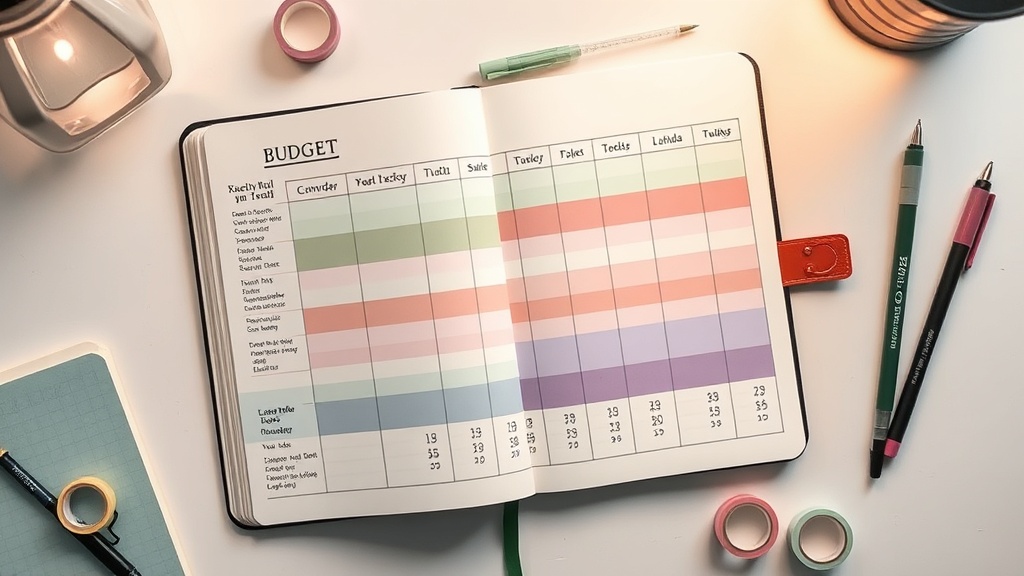
I am going to be honest about something embarrassing. Last fall I was lying in bed at two in the morning, refreshing my bank app for the third time that night, trying to mentally subtract my upcoming car insurance payment from the number on screen. I had a beautifully decorated monthly spread, a habit tracker with fourteen categories, and a sticker collection that could stock a small shop. But I had zero clue where my money was going.
My bullet journal was gorgeous. My finances were a mystery. That felt absurd.
So I built a cash-flow spread — not a budget in the traditional "assign every dollar a job" sense, because that method makes me want to throw my journal across the room. More like a visual snapshot that shows me exactly where I stand at any point in the month without opening an app or doing mental math at 2 AM.
Here is exactly how I set it up, what I track, and why I think most bullet journal budget pages fail for the same reason mood trackers do — they ask you to oversimplify something that is not simple.
Why Traditional Budget Spreads Did Not Work for Me
Every budget spread I tried from Pinterest had the same basic structure: categories on the left, a budgeted amount, an actual amount, and the difference. Groceries: budgeted $300, spent $347, over by $47. Repeat for twelve categories. Color in red if over, green if under.
The problem is I never actually updated it. I would set it up on the first of the month with beautiful headers and perfect columns, fill in maybe the first week, and then just… stop. By week three the page was half-empty and I felt guilty every time I flipped past it.
Strong opinion: if a spread makes you feel guilty, it is not a productivity tool. It is a shame generator. Rip it out.
The real issue was that traditional budget spreads are designed for people who check them daily, and I am a weekly-review person. I needed something that works with my actual habits, not against them.
My Cash-Flow Layout: The Setup
I use a full two-page spread for the month. Left page is money in, right page is money out. Revolutionary? No. But the structure within each page is what makes it actually usable.
Left Page: Income + Fixed Knowns
At the top I write my take-home pay date and amount. Below that, I list every fixed expense I already know is coming — rent, car insurance, subscriptions, the gym membership I keep meaning to cancel. Each one gets the date it hits and the exact amount.
Then I draw a line and write the number that is left. That is my actual spending money for the month. Not my income. Not my "budget." The real number after all the non-negotiable stuff is handled.
This alone changed everything. Seeing that one number — the actual cash I have to work with after bills — removed like 80% of my financial anxiety. I was not broke. I just had no idea what "broke" actually meant for my situation.
Right Page: The Flow Tracker
This is where it gets different from a standard expense tracker. I divide the right page into four horizontal sections, one per week. Each section has three columns: what I spent money on, how much, and a running total that counts down from my spending number on the left page.
The running total is the whole point. At any moment I can open my journal, look at the current week, and see exactly how much flexible money I have left. No app. No math. No 2 AM bank refreshes.
I do not categorize expenses on this page. I tried that and it turned into the same over-complicated grid I was trying to escape. On the flow tracker I just write "Target run" or "coffee with Megan" or "Etsy washi haul (oops)." Honest, quick, no judgment columns.
The Weekly Check-In That Takes Four Minutes
Every Sunday during my planning session — right after I set up my weekly spread and before I get into the fun decorative stuff — I spend four minutes on the cash-flow page. I pull up my bank transactions for the week, jot down anything I missed, and update the running total.
Four minutes. That is it. And those four minutes have given me more financial clarity than any budgeting app I have ever downloaded and deleted within two weeks.
The key is that this is not a guilt session. I am not comparing categories to targets. I am just recording what happened and seeing where the number lands. Some weeks I spend more. Some weeks I spend less. The spread does not judge me and I do not judge myself. It just shows me reality.
The Color System (Because Obviously)
Okay, it would not be my journal if there was no color involved. I use a simple three-color system with my Tombow dual brush pens:
- Sage green for needs — groceries, gas, prescriptions, anything I genuinely had to buy
- Dusty rose for wants — dining out, that adorable ceramic pen holder from the farmers market, concert tickets
- Lavender for investments in future me — the online lettering class, my emergency fund transfer, that book on creative business I have been meaning to read
I do not stress about which category something falls into. If I am standing in Target debating whether the new Archer and Olive journal is a need or a want, I have already lost the plot. Just pick a color and move on. The point is the pattern over time, not any single purchase.
After two or three months, I could literally see my color ratios shifting. January was almost entirely green and pink. By March, more lavender was showing up. That visual feedback was more motivating than any pie chart on Mint ever was.
What I Added After Three Months
Once the basic spread was a habit, I added two small extras:
A "no-spend days" mini tracker. Just a row of circles at the bottom of the right page, one per day of the month. I fill one in for every day I do not spend any flexible money. It is weirdly satisfying to see a streak build up, and it gamifies saving without making me feel deprived. My record is nine days in a row and yes I am unreasonably proud of that.
A "worth it / not worth it" column. At the end of each week during my check-in, I put a tiny star next to purchases I am genuinely glad I made and a tiny X next to ones I regret. After a few months of data, I noticed a clear pattern: I almost never regret spending money on experiences or art supplies. I almost always regret impulse clothing purchases and random Target home decor. That information is worth more than any budget category.
The Spreads I Stopped Making
Since I started the cash-flow system, I dropped three other financial spreads that were cluttering my journal:
- The savings thermometer. Cute in theory, but I never updated it. A simple note in my running total showing my savings transfer is enough.
- The subscription tracker. I realized I only need to audit subscriptions once or twice a year, not track them monthly. Now I just do a subscription purge page in January and July.
- The category-based budget grid. Gone. Do not miss it. Will not be returning.
Fewer spreads, more clarity. That is the trade I made and I would make it again every time.
Common Questions I Get About This System
"What about savings goals?" I treat my monthly savings transfer as a fixed expense on the left page. It comes out before I calculate my spending number. Pay yourself first is a cliché because it works.
"What if you go over?" It has happened. The running total goes negative and I draw a little dotted line to show where I dipped into next week's money. No drama. I just know I need to tighten up for a few days. The spread does not punish me. It just tells the truth.
"Do you use any apps alongside this?" My bank app for checking transactions during the weekly review. That is it. I tried syncing with YNAB and Mint simultaneously and all three systems made me want to scream. One system. Analog. In the journal I am already using every day.
"Is it too simple?" For some people, yes. If you have complex investments, multiple income streams, or business expenses, you probably need more structure. This system is built for someone like me — one main income, regular bills, and a spending life that is mostly groceries, coffee, and art supplies with the occasional splurge.
The Real Reason This Works
It works because it lives in my bullet journal and I am already in there every single day. I do not have to open a separate app or remember a login or sync my bank. It is right there, two pages after my weekly spread, waiting to be honest with me.
The best financial tracking system is the one you actually use. For me, that is a two-page spread, three Tombow colors, and four minutes every Sunday. My 2 AM bank app habit is gone. My financial anxiety went from a seven to about a three. And my journal finally does something useful with money instead of just looking pretty while I panic.
If your budget spreads keep ending up half-empty by week three, try this. Stop tracking categories. Start tracking flow. And for the love of your sleep schedule, stop doing math in bed.