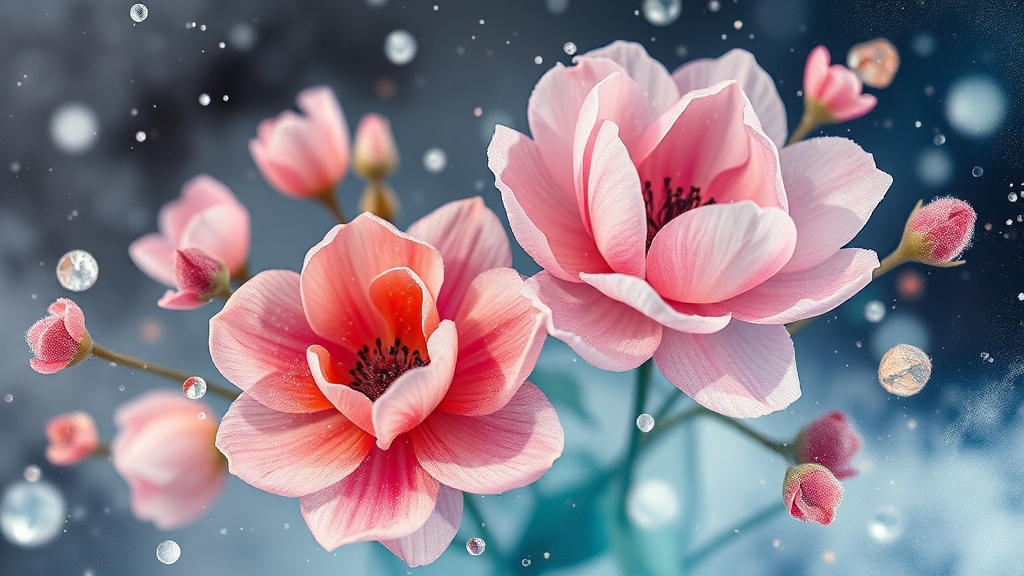
Creating Ethereal Watercolor Florals with Salt Texturing

Have you ever looked at a watercolor painting and wondered how the artist achieved those tiny, crystalline structures that look almost like frost or stardust within the petals?
The secret lies in a simple chemical reaction between pigment and sodium chloride. Salt texturing is a technique that introduces organic, unpredictable textures into your botanical illustrations, making them appear more ethereal and multidimensional. While many artists use this for abstract washes, applying it specifically to floral forms requires a delicate touch and a strict understanding of water-to-pigment ratios. In this guide, we will move beyond basic experimentation to master the precise application of salt to create professional-grade watercolor florals.
The Essential Toolkit for Salt Texturing
To achieve consistent results, you cannot rely on kitchen salt alone; the grain size and purity of your medium will dictate the final texture. A lack of precision in your tools often leads to muddy results rather than the crisp, crystalline effects seen in professional botanical art.
- High-Quality Watercolor Paper: Use 140lb (300gsm) cold-pressed paper, such as Arches or Fabriano. The heavy tooth of cold-pressed paper is essential because it holds the water necessary for the salt to react without the paper buckling or the pigment bleeding uncontrollably.
- Professional Grade Watercolors: I recommend using pan sets like Winsor & Newton Professional or tube paints like Daniel Smith. These contain higher pigment loads and fewer fillers, ensuring that when the salt pulls the pigment, the color remains vibrant rather than graying out.
- Varied Salt Types: You will need a combination of Table Salt (fine grain) for subtle, misty effects and Kosher Salt (coarse grain) for larger, more dramatic crystalline structures.
- Brushes: A mix of synthetic round brushes (sizes 6 and 10) for applying wet washes and a smaller detail brush (size 2) for controlled placement.
- Small Containers: Use small ramekins or even an empty egg carton to keep your different salt densities separated and ready for use.
Phase 1: Preparing the Botanical Foundation
Before you introduce the salt, you must establish the structural integrity of your flower. If you apply salt too early, you risk losing the definition of your petals. The goal is to create a "wet-on-wet" environment that is saturated but not drowning in water.
Begin by sketching your floral design with a hard lead pencil, such as a Staedtler Mars Lumograph 2H. Keep your lines light; heavy graphite can smudge into your wet watercolor and dull the luminosity of your colors. Once the sketch is complete, start with your lightest value. For a peony or a rose, this means applying a very diluted wash of your base color—perhaps a pale blush or a soft sage green—to the petals.
Pro-Tip: Use the "wet-on-wet" technique by brushing clear water onto the petal area first, then dropping in your pigment. This ensures the edges of your flowers remain soft and organic. If the paper is too dry, the salt will sit on top of the pigment rather than absorbing it, resulting in a gritty, unattractive texture rather than a seamless integration.
Phase 2: The Science of Salt Application
The magic happens when the salt crystals hit the wet pigment. The salt is hygroscopic, meaning it actively attracts and absorbs the water and pigment from the surrounding area. As the salt dries, it leaves behind a distinctive pattern that mimics the look of organic cells or light reflecting off dew.
Technique A: The Subtle Mist (Fine Grain Salt)
For a delicate, ethereal look—perfect for cherry blossoms or light wildflowers—use fine table salt. Once your petal wash is glistening with moisture (but not running off the edges), take a pinch of fine salt and lightly sprinkle it across the mid-section of the petal. Do not overdo it; a heavy layer of fine salt can create a "crust" that is difficult to brush off once dry. This method creates a soft, stippled effect that adds depth without distracting from the flower's shape.
Technique B: The Dramatic Crystalline Effect (Coarse Grain Salt)
If you are painting a more robust flower, such as a dahlia or a sunflower, you want more dramatic texture. Use coarse Kosher salt. Place the larger grains specifically in the center of the flower or along the base of the petals where shadows are deepest. This creates a high-contrast texture that mimics the intricate, structural details of a plant's anatomy. The larger surface area of the Kosher salt pulls more pigment, creating larger "blooms" of color and texture.
"The key to successful salt texturing is timing. If the paint is too wet, the salt will create large, messy blotches. If it is too dry, the salt will simply sit on the surface like sand. You are looking for the 'sweet spot' where the paint is saturated but the movement of the water has slowed."
Phase 3: Managing Color Transitions and Layering
One of the biggest mistakes in salt-textured painting is adding too many colors at once. If you mix too many pigments in one wet area, the salt will pull all of them together, resulting in a muddy, brownish texture rather than a vibrant one. To maintain the beauty of your florals, work in layers.
- Layer 1: The Base Wash. Apply a single color wash to the petal. While it is still wet, add a tiny amount of a slightly darker shade to the base of the petal for depth.
- Layer 2: The Salt Reaction. Apply your salt (fine or coarse) to this wet area. Wait for it to dry completely. Do not attempt to brush the salt off while the paper is still damp, as this will tear the paper fibers and ruin your work.
- Layer 3: The Detail Work. Once the salt has been brushed away and the paper is bone-dry, use a smaller brush to add fine details like veins, stamen, or sharper edges. This brings the "ethereal" texture back into a structured, botanical form.
If you find that your colors are becoming too muted, you might consider exploring palette knife texturing in a subsequent project to add even more physical dimension to your work once you have mastered the pigment-pulling capabilities of salt.
Common Pitfalls and How to Avoid Them
Even experienced watercolorists encounter issues with salt. Here are the most frequent challenges and how to troubleshoot them:
Problem: The salt creates large, ugly blotches.
Solution: Your water-to-pigment ratio is too high. You have created a "puddle" rather than a "wash." Next time, use a thirsty brush (a brush that has been dampened and then blotted on a paper towel) to soak up excess water before adding the salt.
Problem: The texture is invisible once dry.
Solution: The paint dried too quickly. This often happens with high-quality, pigment-heavy paints that have less water. To prevent this, you can use a humidifier in your studio or work on a slightly thicker sheet of paper that retains moisture longer.
Problem: The paper is pilling or tearing.
Solution: You are likely trying to remove the salt while the paper is still damp. Always wait until the paper is 100% dry. Use a soft, dry waynes brush to gently flick the salt away rather than scrubbing it.
Final Flourishes: Bringing the Florals to Life
Once your salt-textured petals are dry and the salt has been removed, your painting will have a beautiful, organic texture. However, it may still look a bit "flat" in terms of light and shadow. To finish your piece, use a fine-liner pen or a very concentrated pigment to add the final details.
I often use a Uni Pin Micron pen in a light grey or a sepia tone to add extremely fine lines to the edges of the textured areas. This provides a visual "anchor" for the eye, making the ethereal, blurry texture of the salt look intentional and sophisticated. You can also add a few tiny dots of white gouache or a white gel pen to simulate highlights, which will play off the crystalline texture you've created.
By treating the salt not as a gimmick, but as a structural tool, you elevate your botanical illustrations from simple sketches to professional-grade art. Whether you are decorating a journal spread or creating a standalone piece, these textured florals will bring a sense of organic movement and professional depth to your creative agenda.
Steps
- 1
Prepare your wet wash
- 2
Sprinkle salt onto damp paint
- 3
Wait for drying process
- 4
Brush away excess salt